Farming
Farming
------
We farm about 3,500 acres of which 1,700 is owned and the rest farmed under a mixture of contract farming, FBT’s and straight rental arrangements. Most of the land is situated in and around the parish of Ruyton XI Towns with a further block close to the village of Loppington.
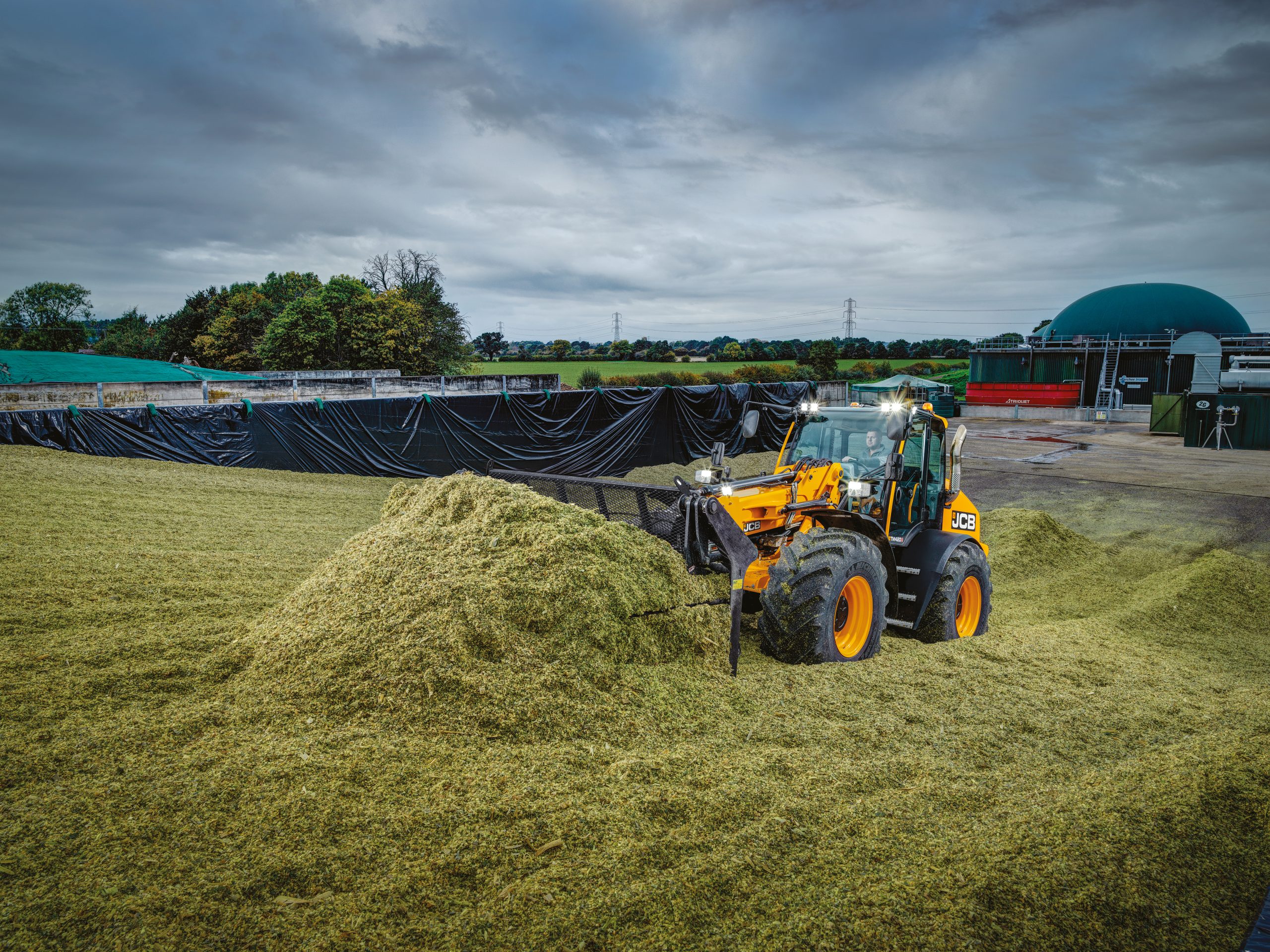
Standard cropping is enhanced by the addition of multi-year lucerne and grass leys from which we produce high value hay products for the breeding bull, dry cow and dairy markets. The lucerne offers huge benefits for soil fertility and structure. We grow cash catch crops of forage rye between winter cereals and spring sown crops which are either foraged for the digester or dried for early hay. We utilise digestate on growing crops and are able to umbilical onto 90% of our land from one of three lagoons. We use an 18m dribble bar on 36m tramlines.
Sugar Beet
------
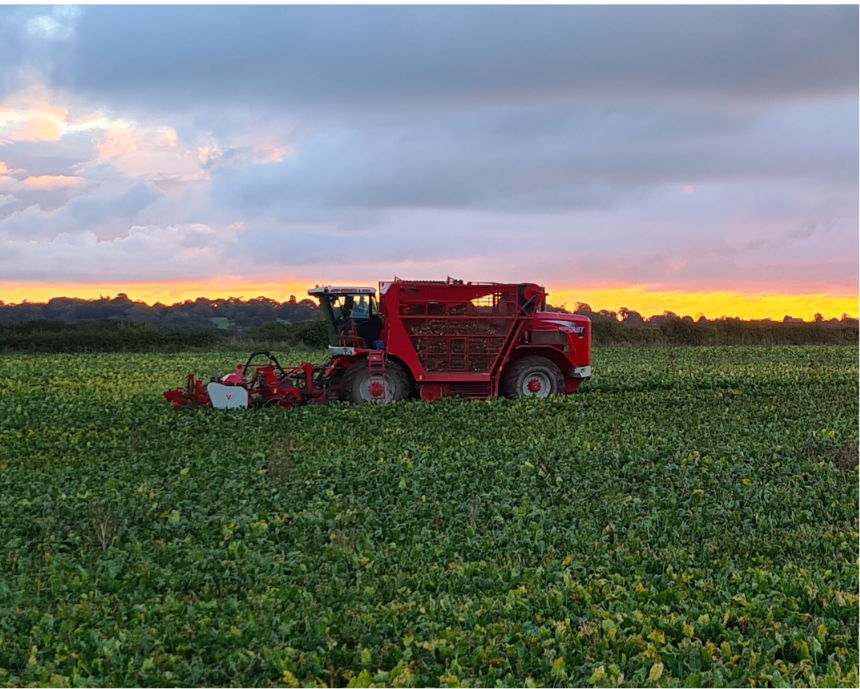
Sugar beet has been grown on our farm since 1930. Back then, harvesting the crop was a back-breaking process with each root having to be pulled, cleaned, topped by hand and then stacked in clamps, awaiting delivery to the factory. Delivery to the factory was either made by Sentinel Steam lorries loaded by hand for direct transport to Alscott or was delivered to Baschurch to be sent by train.
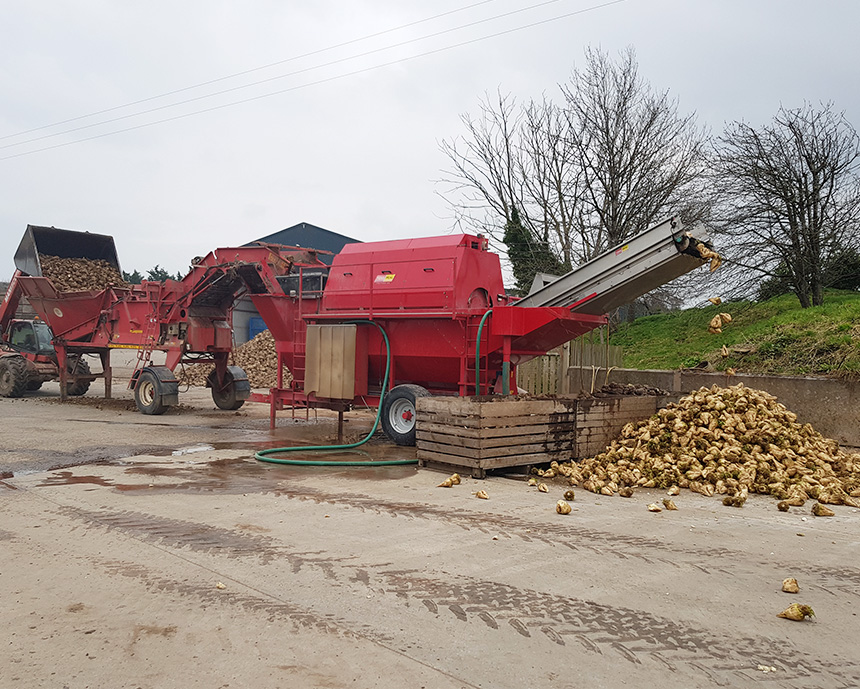
The factory closed in 2007, which at the time was a big blow to Shropshire farmers. Since then, we have found new and more versatile markets for the beet we grow. We sow high dry matter varieties (circa 24%) which are harvested from October through to the following April. Beet is washed and destoned and then sold into the dairy, beef and sheep markets throughout the winter. About half of the tonnage we produce goes to make renewable electricity and heat via our anaerobic digester.
Lucerne (Alfalfa)
------
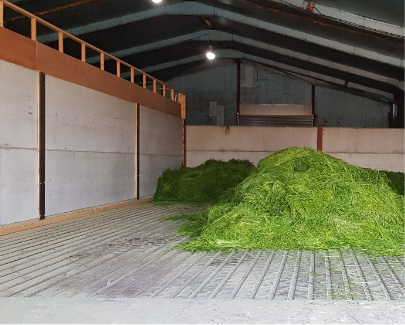
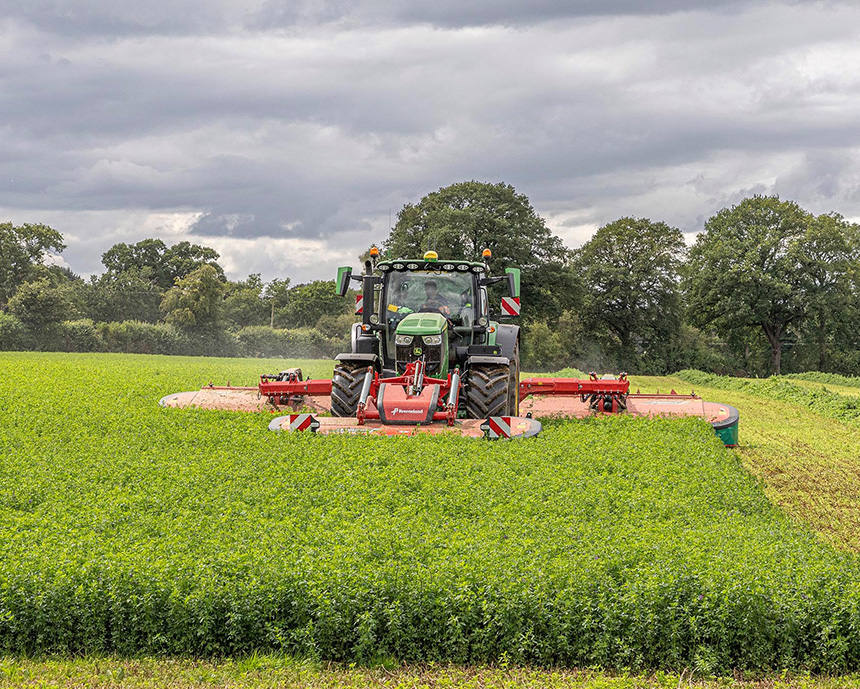
After grass, more acres of Lucerne (Alfalfa) are grown across the world than any other forage crop. Despite this, it is a minority crop in the UK as it’s perceived main use as hay is seen as too risky to make with our relatively wet and variable summers. However, here at WHG we have got around this problem by drying the product on our drying floors to produce a high quality hay product sought after in dairy diets. We are at the forefront of doing this and we believe that lucerne production will grow significantly over the next few years. It has several important environmental benefits that make it perfect for farming’s current direction of travel. As a legume it does not require nitrogen fertiliser, has a high protein content and is full of important macro and micro nutrients, making it an excellent alternative to imported soya. As a perennial crop, once sown it can provide 5 years of quality production; basically we are zero-til for 5 years. It’s perennial nature and deep rooting structure improve the soil structure, water holding capacity, stops soil erosion and increases earthworm numbers. The cereal crops we grow after lucerne are high yielding and low cost due to the improved soil fertility and structure. The ‘break’ from standard cropping also ‘cleans’ the fields and we see much lower disease and pest pressure.
As you might gather – we like lucerne a lot!
Maize
------
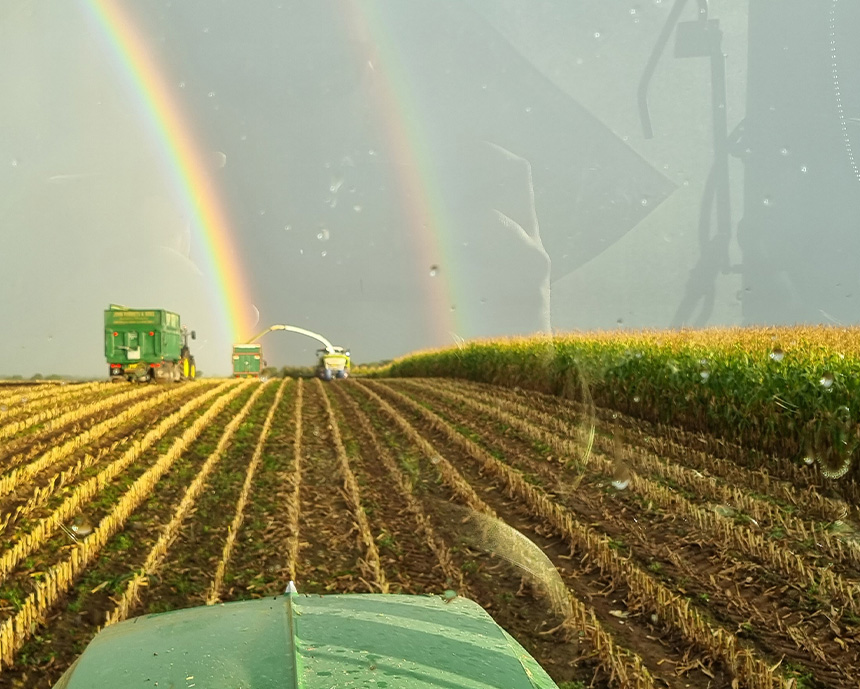
We grow maize for animal feed and to help power our anaerobic digester. We sow the crop in the spring and it is usually harvested at the end of September. This is a good break crop for us and it is typically followed by a crop of winter wheat.
Hybrid Rye
------
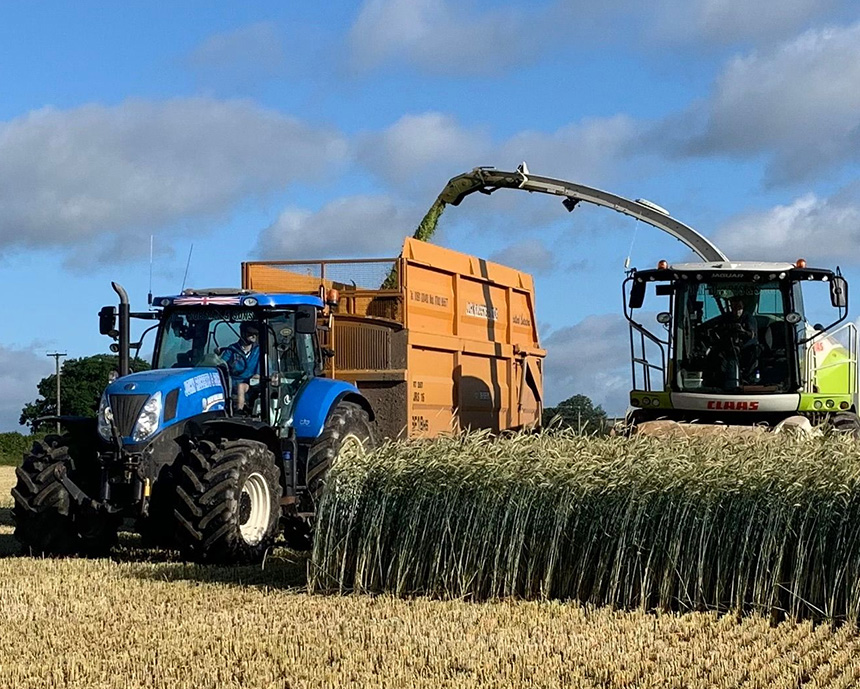
Hybrid Rye is a very tall, bulky cereal. Its high biomass makes it ideal as a feedstock for our anaerobic digester. Sown in the autumn and harvested in early July, it allows us to clear land early in the season, spreading our workload and risk as well as providing an ideal precursor for OSR, wheat or Lucerne.

Forage Rye
------
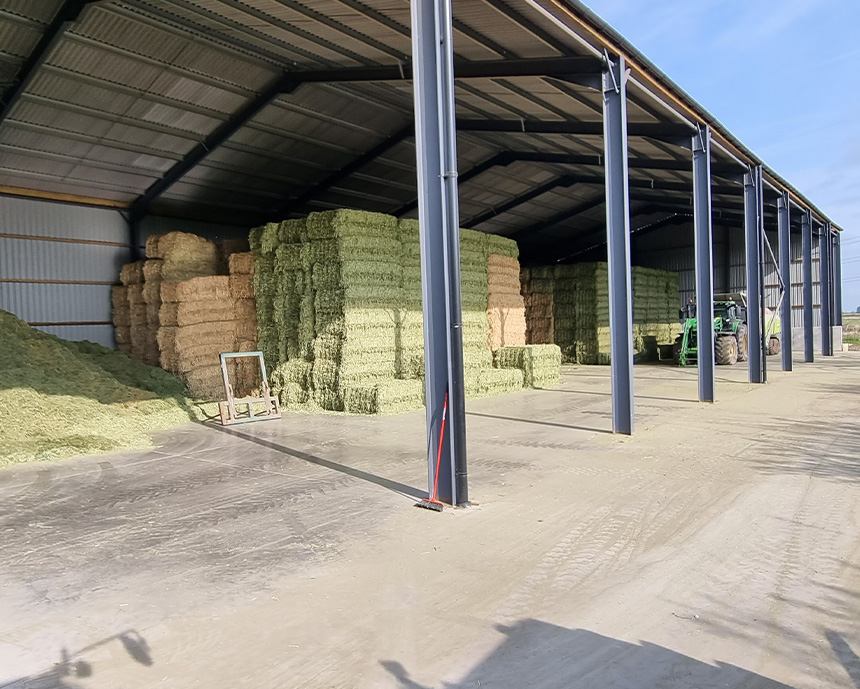
Forage rye is grown as a catch crop between winter wheat and a following spring crop. We are effectively turning a catch crop into a cash crop. FR grows incredibly quickly over the winter and early spring. We use the forage rye in two ways, some is foraged for silage, and the rest is dried on our drying floors and then stationary baled to be sold to the dairy, beef and bull markets.

Combinable Crops
------
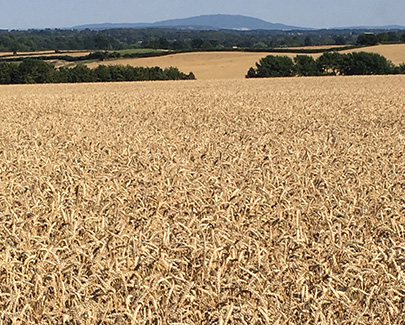
Wheat and Oil Seed Rape (OSR) account for just under half of our cropping at WHG. OSR is grown for rapeseed oil with the byproduct being a valuable animal feed. Wheat is grown for bread, biscuits and animal feed. If this year’s wheat production were all to go for breadmaking we would be producing over 4.5 million loaves of bread!